
Blog
Sales Qualified Leads in B2B: What They Are and Why They Matter
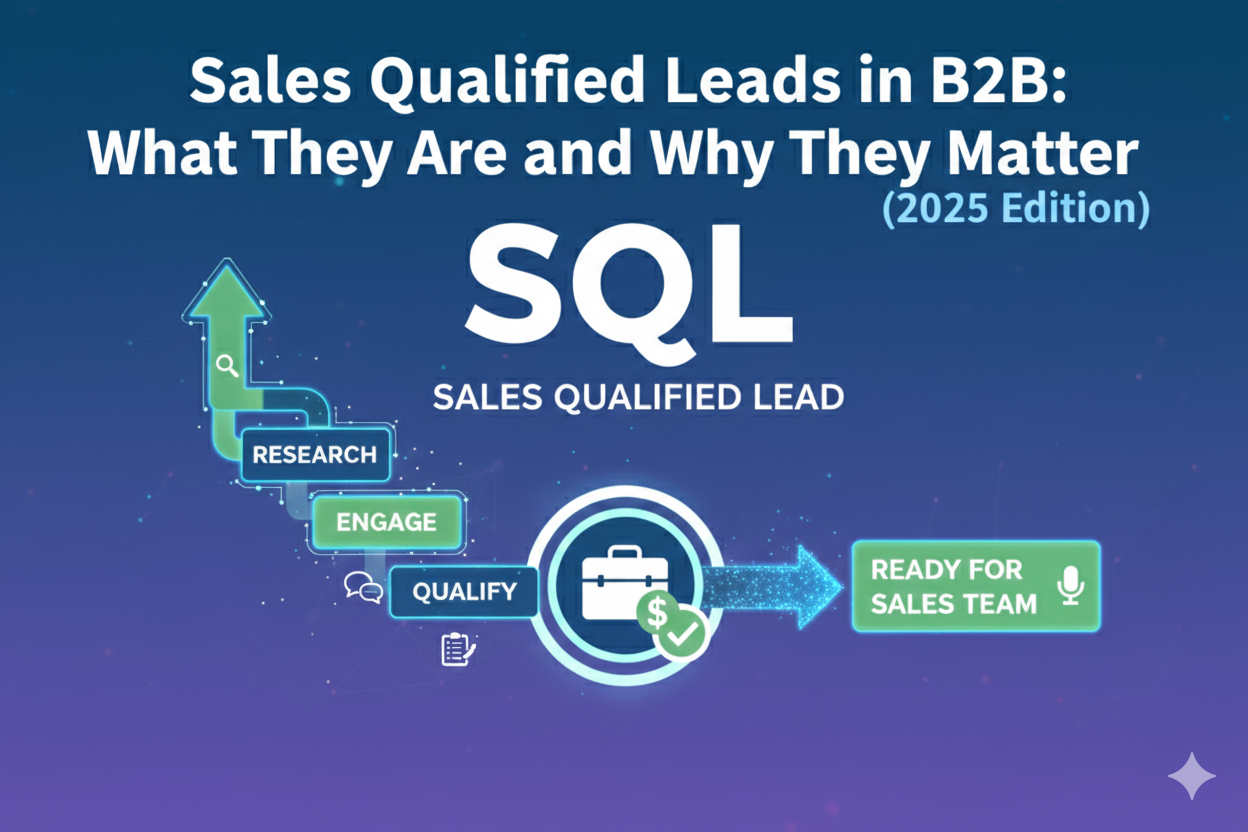
In B2B sales, the real challenge isn’t generating leads—it’s converting them. Many companies face a common problem: while the top of the funnel is overflowing with leads, only a small fraction turn into meaningful conversations or revenue opportunities. Marketing teams might celebrate the surge in lead volume, but sales teams often hear, “These leads aren’t ready to buy.”
This disconnect between marketing and sales can create frustration and inefficiency. Without proper lead qualification and nurturing, even the most promising leads can go cold, wasting time and resources. Closing the gap requires a coordinated approach where marketing delivers not just quantity, but quality, and sales engages leads with the right message at the right time.
1. What Is a Sales Qualified Lead (SQL)?
A Sales Qualified Lead (SQL) is a prospect who has moved beyond initial interest and is actively considering your product or service. Unlike casual browsers, SQLs are evaluating solutions and showing clear buying intent, making them prime candidates for a meaningful sales conversation.An SQL aligns with your company’s ideal customer profile (ICP)—they come from the right industry, hold the relevant role, and exhibit characteristics of a buyer likely to make a purchase. What sets them apart is their intent: they’re engaging with your product in ways that indicate readiness to buy.
Examples of SQL behavior include:
- Requesting a demo or trial
- Asking about pricing or packages
- Engaging with comparison or solution-focused content
- Repeatedly visiting product pages or responding to outreach
2. What Role Do SQLs Play in the B2B Sales Funnel?
The Sales Qualified Lead (SQL) stage is a pivotal point in the B2B sales funnel, marking the transition from casual interest to serious buying intent. It serves as the bridge between early-stage leads—who are exploring, learning, or comparing options—and prospects who are ready to engage in meaningful business discussions.When a lead reaches SQL status, their actions signal clear intent: requesting a demo, checking pricing, or asking detailed product questions. These behaviors indicate that the prospect isn’t merely browsing—they are actively evaluating solutions and may be close to making a decision.
At this stage, the sales team can confidently step in, focusing efforts on high-potential leads. SQLs help prioritize resources, ensuring sales conversations are spent on prospects with the greatest chance of conversion. Once a lead is verified to fit the ideal customer profile (ICP) and demonstrate a genuine buying need, the SQL advances to an Opportunity, entering a structured pipeline that may include:
- Detailed use-case discussions
- Product walkthroughs
- Solution mapping
- Pricing and negotiation
3. SQL Criteria: How Companies Define a Sales Qualified Lead
To determine if a lead is genuinely ready for the sales team, companies rely on specific criteria that assess two key aspects: fit and buying intent. Fit evaluates whether the lead matches the company’s ideal customer profile (ICP)—their industry, role, company size, and other characteristics that make them a good potential customer. Buying intent measures whether the lead is actively interested in purchasing, demonstrated through actions like requesting demos, asking for pricing, or engaging with solution-focused content.Together, these factors help businesses identify SQLs—leads who not only belong to the right audience but are also ready to move forward in the sales process.
A. Fit-Based Criteria (ICP Fit)
Fit-based criteria evaluate whether a lead aligns with the company’s Ideal Customer Profile (ICP). Even if a prospect shows interest, they aren’t considered an SQL unless they are the right type of customer. Key factors companies consider include:- Company Size: Do they have the right number of employees, revenue, or location to benefit from your solution?
- Job Role: Are they a decision-maker or someone who influences purchasing decisions?
- Tech Stack: Do they use tools or systems compatible with your product?
- Pain Points: Do they face challenges your product is designed to solve?
4. Why SQLs Are Important for Marketing
The SQL stage is critical for marketing because it measures how effectively marketing efforts are turning interest into tangible business opportunities. It moves the focus from simply generating leads to attracting the right leads—those ready to progress toward a purchase.1. Focus on Quality Over Quantity
Generating leads is easy; generating high-quality leads is the real challenge. SQLs help marketing teams understand what differentiates a casual lead from a sales-ready prospect. By analyzing this, marketers can refine messaging, target the right audience, and optimize campaigns—shifting the focus from large numbers to leads with a higher likelihood of conversion.2. Enhance Content Strategy
Not all content moves prospects toward buying. By analyzing which pieces of content generate SQLs, marketers can produce more high-impact materials such as case studies, product comparisons, ROI calculators, and industry-specific guides. These assets help leads move confidently from MQL to SQL.Conclusion
Understanding Sales Qualified Leads (SQLs) is crucial for any B2B company aiming to turn interest into actual revenue. SQLs provide clarity throughout the sales process, highlighting leads who are not just curious but genuinely ready to evaluate solutions and make purchasing decisions. When marketing and sales teams align on the definition of an SQL, targeting becomes more precise, conversations become more meaningful, and the overall sales funnel operates far more efficiently.SQLs are more than just a stage in the pipeline—they are a clear signal of real business potential. They enable teams to prioritize quality over quantity, foster better collaboration, and create a predictable path from lead generation to customer acquisition. By defining and managing SQLs effectively, companies can not only boost conversion rates but also build a smarter, stronger, and revenue-driven growth engine.